Introduction — Why Traffic Alone Doesn’t Grow Real Estate Businesses Anymore
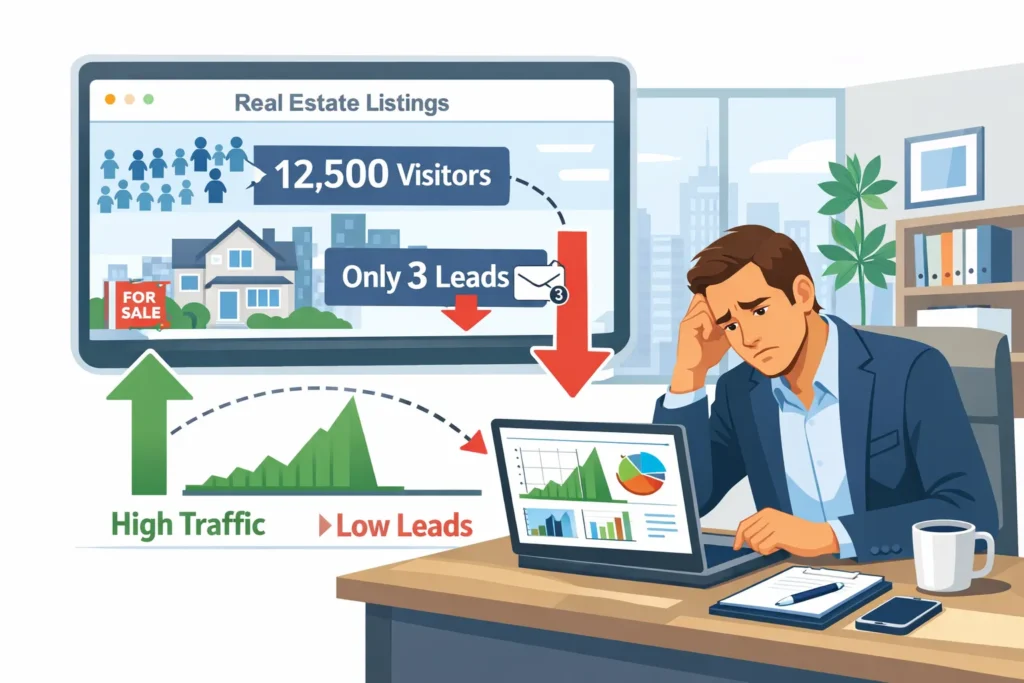
For years, real estate marketing revolved around one vanity metric: traffic. More visitors meant more success—or so the thinking went. But in today’s competitive real estate landscape, especially across Pakistan, UAE, Saudi Arabia, Qatar, and Bahrain, traffic alone no longer translates into deals, bookings, or revenue.
At Nexfin Services, we work exclusively with real estate businesses, and one truth has become clear: the right traffic beats more traffic—every single time.
The Shift from “More Visitors” to “Right Visitors”
Not all website visitors are equal. A thousand random visitors browsing out of curiosity will never outperform ten users who are actively searching to buy, sell, or invest.
Consider this simple comparison:
- Someone searching “real estate trends” is likely doing general research or casual reading.
- Someone searching “3 bedroom apartment for sale in Dubai Marina” is signaling immediate buyer intent.
Real estate SEO today is about capturing commercial and transactional intent, not chasing broad, informational keywords that look good in analytics but fail to generate leads.
This is why modern SEO strategies—especially for agents, brokers, and developers—focus on:
- Search intent alignment
- Local and project-specific keywords
- Trust signals and authority
- Conversion-focused content
These are the same principles we apply across our Real Estate SEO Services to help clients move beyond vanity metrics and toward measurable growth.
Why Buyer Intent Matters More Than Ever in Real Estate SEO
Search engines have evolved—and so have users.
Google now prioritizes content that demonstrates:
- Expertise and authority
- Local relevance
- Clear answers to high-intent queries
For real estate businesses, this means SEO must support the entire decision-making journey:
- Buyers researching locations
- Investors comparing projects
- Sellers evaluating agencies
- Developers targeting overseas investors
Whether someone is searching for property in Lahore, Dubai, Riyadh, or Doha, the goal is the same: show up at the exact moment they’re ready to act.
This approach aligns closely with Google’s own guidelines on search intent and helpful content, as outlined in Google Search Central documentation.
SEO Is Now About Trust, Not Tricks
In real estate, trust is everything. High-value transactions don’t happen because of clever hacks or keyword stuffing. They happen because:
- Your brand appears consistently for relevant searches
- Your content answers real buyer and seller questions
- Your website signals professionalism, experience, and credibility
That’s why serious real estate brands invest in long-term SEO strategies, not shortcuts. They understand that ranking for high-intent keywords today leads to:
- Better-quality inquiries
- Shorter sales cycles
- Higher ROI than paid ads alone
If you explore our About Nexfin Services page, you’ll see why our SEO philosophy is rooted in authority-building—not temporary growth spikes.
This is exactly why forward-thinking developers, brokers, and agencies across the GCC and Pakistan are shifting budgets toward SEO that generates qualified leads—not just traffic.
Qualified Leads vs Generic Traffic — Understanding the Difference
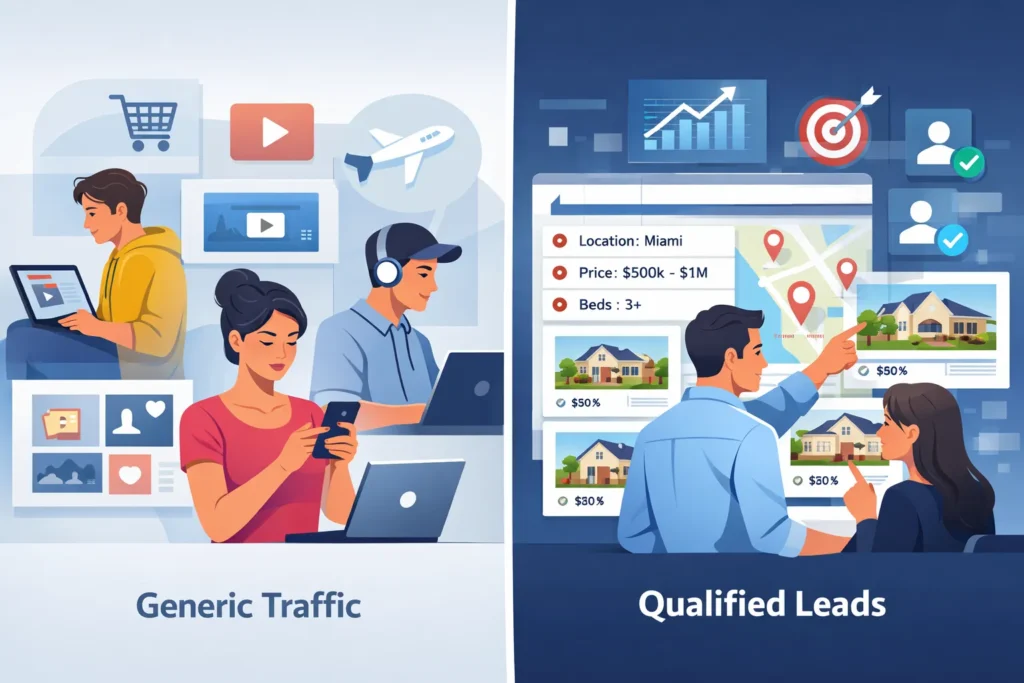
One of the biggest misunderstandings in real estate digital marketing is assuming that all traffic has value. In reality, only a small percentage of website visitors are ever capable of becoming clients. The role of real estate SEO is not to increase numbers in Google Analytics—but to filter out unqualified visitors and attract people who are ready to take action.
This distinction is what separates lead-generating websites from content-heavy sites that never convert.
What Is a Qualified Real Estate Lead?
A qualified real estate lead is not just someone visiting your website. It’s someone whose search behavior clearly indicates intent.
These users are typically:
- High-intent and action-ready
They are searching with phrases like:- “2 bedroom apartment for sale in Lahore DHA”
- “off-plan villas in Dubai for investors”
- “commercial property for rent in Riyadh”
- Location-specific
Real estate is hyper-local. Qualified leads always include:- City, area, or community names
- Project, developer, or property type references
- Aligned with your services
Whether they are:- Buyers looking for listings
- Sellers searching for professional agencies
- Investors comparing opportunities
Their intent matches exactly what you offer as an agent, broker, or developer.
This is why location-focused SEO pages—such as city or area-specific landing pages—play a critical role. For example, businesses targeting local markets often benefit from dedicated location pages like our Lahore Real Estate Marketing focus under the Locations section.
Why Most Traffic Never Converts
Most websites fail to generate leads because they attract the wrong kind of visitors.
Broad, non-commercial keywords such as:
- “real estate market news”
- “property trends in 2025”
- “is real estate a good investment?”
may generate traffic, but they rarely generate inquiries.
The result?
- Low dwell time — users skim and leave
- High bounce rates — no engagement
- Zero form submissions or calls
These visitors are often:
- Early-stage researchers
- Students or casual readers
- People with no immediate buying or selling intent
Google itself uses engagement metrics—like time on page and interaction—to evaluate content quality. When traffic doesn’t engage, rankings and conversions both suffer. This is why SEO strategies that prioritize traffic volume without intent alignment eventually plateau.
Our detailed breakdown in Real Estate SEO in 2025: The Complete Guide for Agents, Brokers & Developers explores how this mismatch silently kills ROI for many real estate brands.
How SEO Filters Out “Tire-Kickers”
Modern real estate SEO acts as a pre-qualification system before a visitor ever contacts you.
Here’s how it works:
1. Long-Tail + Local Keywords
Instead of targeting generic terms like “apartments,” SEO focuses on:
- Property type + location
- Budget or configuration-based searches
- Investment-focused phrases
These keywords naturally attract users who know what they want and where they want it.
2. Intent-Driven Content
High-performing real estate pages are built around:
- Buyer and seller questions
- Comparison content
- Location-specific insights
- Project-level information
This content speaks directly to people in the decision-making phase, not the browsing phase.
3. Search Behavior Aligned with Buying Stages
SEO aligns pages with different stages of the real estate journey:
- Awareness → Area guides, investment insights
- Consideration → Property comparisons, listings
- Decision → Contact pages, consultation CTAs
When SEO is structured correctly, casual browsers drop off early—while serious buyers move deeper into your website.
This approach is exactly how our SEO Services for Real Estate are designed: to qualify leads before they reach your inbox.
How Real Estate SEO Actually Generates High-Intent Leads

Real estate SEO works because it aligns perfectly with how buyers, sellers, and investors behave today. Unlike ads that interrupt people mid-scroll, SEO places your brand in front of users actively searching—often with urgency and intent.
This is where qualified leads are born.
Buyers Start With Google — And They’re Ready to Act
Across Pakistan and the GCC, the real estate buying journey almost always begins with Google.
Modern buyers and investors:
- Research locations, prices, and regulations online
- Compare multiple projects before contacting an agent
- Trust organic search results more than sponsored placements
According to Google’s own research on consumer search behavior, users searching with specific commercial queries are often closer to taking action than those exposed to display or social ads.
Search Behavior of Modern Buyers & Investors
Today’s real estate buyers are:
- Self-educated — they arrive informed
- Comparison-driven — they evaluate multiple options
- Decision-focused — especially in investment-led markets like UAE and Saudi Arabia
By the time they reach your website through organic search, they’re not asking whether to buy—but where and from whom.
This is why real estate businesses that appear consistently in organic search results build authority long before the first phone call or WhatsApp inquiry.
Mobile-First Reality in GCC & Pakistan Markets
In markets like UAE, Saudi Arabia, Qatar, and Pakistan, mobile searches dominate real estate discovery.
Buyers frequently:
- Search listings on mobile devices
- Call directly from search results
- Use maps and location-based queries
- Share listings via WhatsApp instantly
Google’s mobile-first indexing means your site is ranked primarily on its mobile experience, speed, and usability. SEO ensures your website is:
- Fast-loading
- Easy to navigate
- Optimized for location-based searches
This is why SEO-driven leads often convert faster than social media traffic, which tends to be passive and entertainment-focused.
Why Organic Search Beats Interruption-Based Ads
Paid ads stop working the moment you stop spending. SEO, on the other hand:
- Builds long-term visibility
- Attracts users with intent, not curiosity
- Generates compounding returns over time
While ads push messages at people, SEO captures people already searching for solutions. That difference alone explains why organic leads often have:
- Higher trust
- Lower cost per acquisition
- Shorter sales cycles
This is one of the core reasons our clients combine SEO with performance marketing rather than relying on ads alone—a strategy outlined on our Services page.
Long-Tail & Location-Based Searches = Higher Conversion
The most profitable real estate keywords are rarely the most searched ones.
High-intent leads come from specific, detailed queries, such as:
- “Apartments for sale in Bahria Town Lahore”
- “Luxury villas for sale in Dubai Marina”
- “Property investment laws in Saudi Arabia”
These searches may have lower volume—but they deliver far higher conversion rates.
Why Lower Volume ≠ Lower Value
Here’s what long-tail, location-based searches signal:
- Clear buying or investment intent
- Knowledge of location and property type
- Readiness to evaluate options or contact an expert
Someone searching “luxury villas for sale in Dubai Marina” is exponentially more valuable than someone searching “Dubai real estate.”
SEO prioritizes these intent-rich searches by:
- Creating area-specific pages
- Publishing legal and investment guides
- Optimizing for local terminology and market nuances
For example, combining educational content with transactional pages—similar to what we do in our Real Estate SEO in 2025 guide—allows your site to attract users across multiple intent levels while still prioritizing conversions.
Keyword Research That Targets Buyer & Investor Intent

Real estate SEO isn’t just about sprinkling property-related words throughout your website. It’s about identifying and targeting the exact searches that lead to qualified inquiries. The most successful campaigns start with intent-driven keyword research, tailored for both buyers and investors.
Mapping Keywords to the Buyer Journey
Not all keywords are created equal. To generate leads, you must align your keywords with the buyer journey:
- Informational Keywords
- Examples: “real estate trends in Riyadh,” “best areas to invest in Dubai”
- Purpose: Educate the audience and build authority
- Lead Potential: Low immediate conversion, high long-term engagement
- Commercial Keywords
- Examples: “compare apartments in Bahria Town Lahore,” “off-plan villa projects Dubai”
- Purpose: Help prospects evaluate options
- Lead Potential: Medium, nurturing stage
- Transactional Keywords
- Examples: “2 bedroom apartment for sale in Dubai Marina,” “buy villa in Jeddah with 10% down payment”
- Purpose: Capture buyers ready to act
- Lead Potential: High, most likely to convert
At Nexfin Services, we focus on commercial and transactional keywords to maximize lead generation, while still leveraging informational content to build authority and trust.
Long-Tail, Local & Feature-Rich Keywords
Generic keywords like “apartments for sale” are crowded and often attract casual browsers. Real estate SEO excels when keywords are specific, location-driven, and feature-rich:
- Property Type + Location + Intent
- “3 bedroom apartment for sale in DHA Karachi”
- “Luxury beachfront villa for sale in Qatar”
- Feature or Financial Terms
- “Installments available,” “ready-to-move,” “off-plan projects”
- “High ROI investment property in Riyadh”
Long-tail, feature-specific keywords filter out tire-kickers and attract users who are closer to making a purchase or investment decision.
Regional & Language Considerations
Keyword strategy must account for regional and linguistic nuances, especially in multi-country markets like the GCC and Pakistan:
- UAE, Saudi Arabia, Qatar, Bahrain: English + Arabic keywords
- Pakistan: English + Urdu keywords
- Target Audience Segmentation:
- Expats looking for investment opportunities
- Local residents searching for their next home
- Overseas investors comparing regulations and ROI
For example, a UAE-based investor may search “luxury villa for sale in Dubai Marina” in English, while a local buyer might type the same query in Arabic. Optimizing for both ensures no high-intent lead slips through the cracks.
Tools & Data-Driven Decisions
Effective keyword research combines strategy with data and analytics:
- Google Keyword Planner: Great for understanding search volume and competition
- Ahrefs & SEMrush: Identify top-performing pages, keyword gaps, and backlinks
- Competition & Difficulty Assessment: Target moderate-competition keywords to win visibility faster, especially for new or niche real estate websites
By analyzing search trends and user intent, you can prioritize keywords that not only drive traffic but convert into inquiries and high-quality leads. This approach underpins all our Real Estate SEO services, ensuring measurable ROI for our clients.
On-Page SEO That Turns Searchers Into Inquiries

At its core, on-page SEO isn’t about stuffing keywords—it’s about creating a website that search engines understand and users trust. For real estate businesses, this means optimizing every page so high-intent visitors move seamlessly from discovery to inquiry.
Title Tags & Headings That Match Search Intent
Your title tags and headings are the first signals both users and search engines see. They must reflect search intent clearly:
- Include keyword + location + value proposition
Example: “Luxury Villas for Sale in Dubai Marina | Nexfin Services” - Maintain a clear H1 → H2 → H3 hierarchy
- H1: Primary topic (property type + location)
- H2: Subtopics (investment benefits, local amenities)
- H3: Supporting details (project features, financing options)
This structure improves both SEO ranking and user experience, helping Google understand your content while guiding visitors naturally through your site.
Content Structure for Humans First
Even the best SEO strategy fails if your content isn’t readable:
- Short paragraphs and bullet points make information scannable
- Trust-building language—like highlighting developer credentials, verified listings, or client testimonials—builds credibility without keyword stuffing
- Conversational tone helps readers relate, especially when targeting multiple markets like Pakistan and the GCC
Remember: Google now rewards helpful content that engages users, not pages filled with repetitive keywords.
Meta Descriptions That Drive Clicks
A meta description is your first chance to convert a searcher into a visitor:
- Include emotional triggers + clarity + CTA
Example: “Explore premium 3-bedroom apartments in Bahria Town Lahore. Schedule a viewing today with Nexfin Services!” - Keep it concise (150–160 characters) and aligned with the page’s search intent
- Think of it as an ad copy for organic search—your click-through rate depends on it
Internal Linking for Lead Flow
Internal linking ensures visitors navigate deeper into your website, moving from casual interest to inquiry:
- Blog → Area Pages → Listings → Contact Page
Example: An article on Dubai Marina luxury apartments can link to:- The Dubai location page
- Individual property listings
- The Contact page for inquiries
- Proper linking keeps users engaged longer and signals content hierarchy to Google, boosting SEO authority
Image, URL & Mobile Optimization
Visuals and technical setup are equally important in real estate:
- Optimized property images: Compressed for speed, include alt-text with keywords like “3 bedroom villa Dubai Marina”
- SEO-friendly URLs: Short, descriptive, and keyword-rich
Example:www.nexfinservices.com/locations/dubai-marina-villas - Mobile optimization: Fast-loading pages and responsive layouts are critical in GCC and Pakistan, where mobile search dominates
Together, these on-page strategies ensure your website is both search-engine-friendly and lead-conversion-ready.
Technical SEO & Trust Signals That Multiply Lead Quality
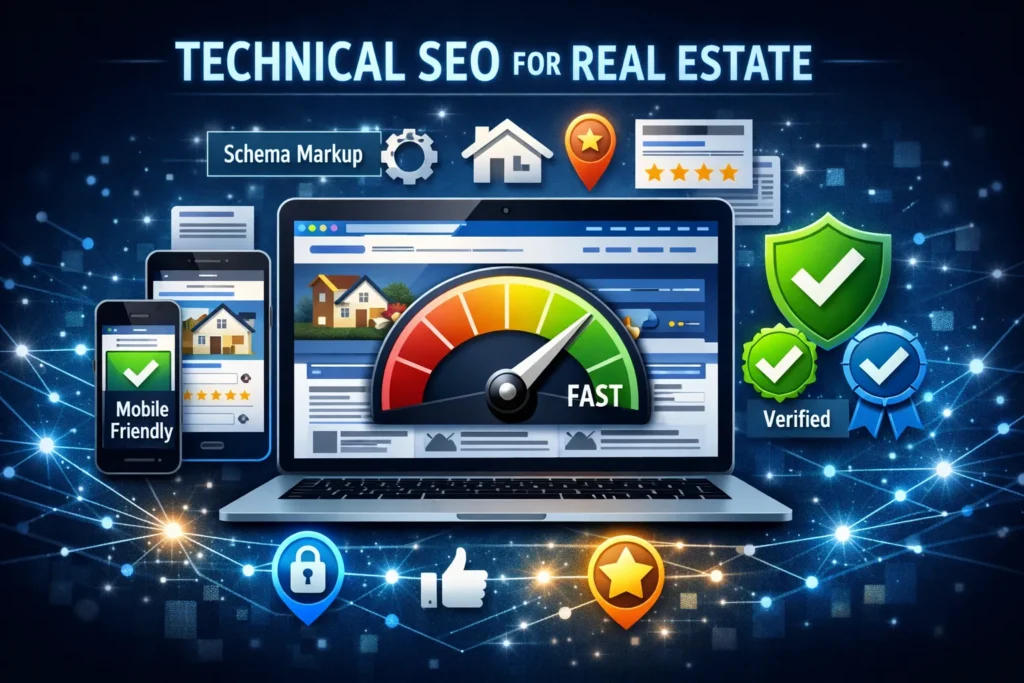
Even the most carefully researched keywords and beautifully crafted pages won’t convert leads if your website isn’t technically optimized and perceived as trustworthy. For real estate businesses, technical SEO and credibility signals are critical to attracting high-intent buyers, sellers, and investors.
Site Speed, Mobile-First & Core Web Vitals
Website performance isn’t just about SEO rankings—it directly impacts conversion rates:
- Site speed: Slow-loading pages frustrate visitors and increase bounce rates. In real estate, where listings often include high-resolution images, speed optimization is essential.
- Mobile-first indexing: Google now primarily evaluates the mobile version of your website. In Pakistan and the GCC, most property searches happen on mobile devices.
- Core Web Vitals: Metrics like Largest Contentful Paint (LCP), First Input Delay (FID), and Cumulative Layout Shift (CLS) ensure your site is fast, responsive, and visually stable.
A technically sound site keeps potential buyers engaged, increasing the likelihood of form submissions, calls, and inquiries.
Schema Markup for Real Estate Visibility
Schema markup allows search engines to understand your content more effectively and display rich snippets in search results:
- RealEstateAgent Schema: Highlights agent credentials and office locations
- Property Schema: Details for individual listings, such as price, location, bedrooms, and amenities
- Review Schema: Displays testimonials and ratings in SERPs
Rich snippets enhance your search listings, building trust before visitors even click, which often leads to higher-quality leads.
E-E-A-T — The Foundation of Authority in 2026
Google’s E-E-A-T framework—Experience, Expertise, Authority, and Trust—is more important than ever for real estate businesses:
- Experience & Expertise: Showcase your team’s credentials, licenses, and market knowledge on your About page
- Authority: Publish in-depth guides, market insights, and success stories
- Trust: Display verified testimonials, client success stories, transparent policies, and secure website practices
E-E-A-T is especially critical for high-value transactions. Buyers and investors are far more likely to contact websites they perceive as authoritative and trustworthy.
Content Freshness & Indexing
Real estate markets move fast. SEO success depends on keeping your website up-to-date and easily crawlable:
- Regular updates: Refresh property listings, investment guides, and market trends to maintain relevance
- XML sitemaps & crawlability: Ensure search engines can index new content quickly, especially time-sensitive listings
- Market-sensitive content: Updates on laws, ROI calculations, and project launches help your site attract decision-ready leads
Combined, technical SEO and trust signals create a high-converting ecosystem: search engines understand your site, users trust your brand, and qualified leads reach you with confidence.
Content Marketing That Builds Authority & Generates Leads

In real estate SEO, content is more than just words on a page—it’s a lead-generation engine and authority builder. Strategic content helps your business educate prospects, showcase expertise, and convert visitors into high-intent leads across Pakistan and the GCC markets.
Educational Blog Content That Solves Real Problems
High-quality, educational blog content positions your brand as a trusted advisor:
- Buying guides, financing tips, legal frameworks, and tax considerations
Example: “How to Buy Property in Dubai Marina as an Expat Investor” - Country- and city-specific insights
Tailor content to local regulations, pricing trends, and investment opportunities in:- Pakistan (e.g., Bahria Town Lahore, DHA Karachi)
- UAE (e.g., Dubai Marina, Downtown Dubai)
- Saudi Arabia, Qatar, Bahrain
By answering real buyer questions, your blogs not only rank for informational searches but also guide prospects toward transactional pages.
Area & Neighborhood Pages (Evergreen Assets)
Evergreen location-based pages are essential for capturing high-intent local traffic:
- Examples: “Living in Bahria Town Lahore: Amenities, Prices & Lifestyle” or “Buying Property in Dubai Marina: ROI & Investment Tips”
- Include details on:
- Amenities, schools, and lifestyle
- Property types and price ranges
- Investment potential and ROI
These pages attract users actively evaluating areas, keeping your brand top-of-mind when they’re ready to act.
FAQs & Featured Snippet Optimization
Optimizing FAQs helps you capture quick answers in search results, increasing visibility and credibility:
- Answer buyer and investor questions directly
Example: “What is the down payment required for off-plan villas in Jeddah?” - Optimize for voice search and featured snippets to reach mobile-first and voice-driven audiences
- Improves organic CTR while filtering high-intent queries toward your listings or consultation pages
Visual, Interactive & Trust-Building Content
Real estate buyers respond strongly to interactive and visual content:
- Videos & virtual tours: Showcase property interiors, amenities, and neighborhood vibes
- Infographics & market reports: Simplify complex investment and ROI data
- Trust-building content: Include client success stories, certifications, and testimonials
This type of content not only engages users but also reinforces your authority, making leads more likely to contact your agency.
Lead Magnets That Convert SEO Traffic
Turning organic visitors into actionable leads requires valuable incentives:
- Buyer checklists: “10 Steps to Buying Property in Dubai Marina”
- Market reports: Regional and city-specific investment insights
- Investment guides: Detailed ROI analysis and property comparison tools
When integrated with SEO-targeted landing pages, lead magnets capture emails, phone numbers, and inquiries—transforming search traffic into measurable, qualified leads.
Local SEO — The Lead Engine for Real Estate Businesses
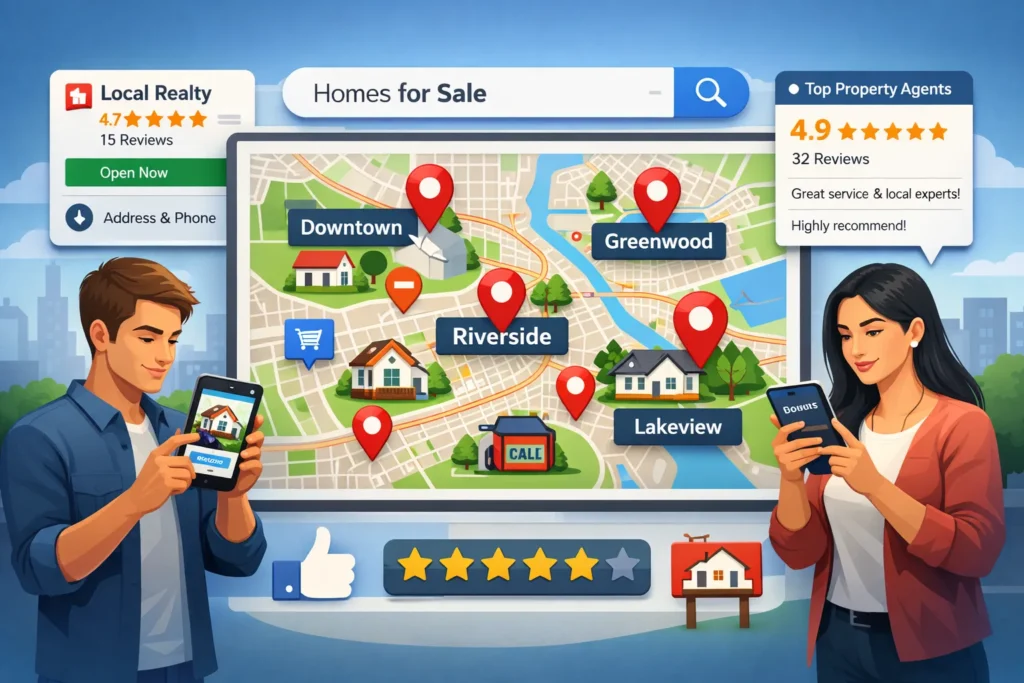
For real estate companies, local SEO is where search traffic converts into tangible leads. Buyers, sellers, and investors are often looking for property “near me” or in specific neighborhoods, and appearing in local search results positions your business right where high-intent prospects are searching.
Google Business Profile Optimization
Your Google Business Profile (GBP) is often the first touchpoint for local leads:
- Accurate NAP (Name, Address, Phone) ensures consistency across search engines
- Photos, posts, and services showcase your properties and expertise
- Review generation strategies: Encourage clients to leave reviews, respond promptly, and highlight testimonials to build trust
A fully optimized GBP increases visibility in Google Maps, local pack results, and mobile searches—key channels for serious buyers in Pakistan, UAE, Saudi Arabia, Qatar, and Bahrain.
Local Keywords & Geo-Specific Pages
Targeting city, area, and neighborhood keywords is essential for capturing hyperlocal leads:
- Example pages:
- “Apartments for Sale in Bahria Town Lahore”
- “Luxury Villas in Dubai Marina”
- “Off-Plan Projects in Riyadh”
- Focus on geo-specific content: amenities, schools, lifestyle, and price ranges
- Helps you rank for buyers searching with intent tied to location, rather than generic searches
Local Citations & Property Portals
Presence on local property platforms and directories reinforces credibility and drives leads:
- Pakistan: Zameen, OLX, Lamudi
- UAE: Bayut, Property Finder
- Ensure consistent NAP and descriptions across all portals
- Listings on reputable property portals boost trust and referral traffic
Local Backlinks & Partnerships
Building authority in your local market increases lead quality:
- Collaborate with chambers of commerce, news portals, and local industry websites
- Earn backlinks from trusted sources, signaling authority to Google
- Partnerships with developers or property associations can provide exclusive listing opportunities, attracting high-intent leads
Local SEO doesn’t just attract more traffic—it funnels qualified buyers, sellers, and investors directly to your website and contact points, making it one of the most effective lead-generation channels for real estate businesses.
Authority Building Through Backlinks & Digital PR

While on-page SEO and local optimization capture and convert high-intent leads, backlinks and digital PR amplify your authority, making it easier for Google to trust your website and rank it for competitive real estate queries. For high-value property markets across Pakistan and the GCC, this authority directly translates into more qualified inquiries.
Why Backlinks Still Matter for SEO
Backlinks are essentially votes of confidence from other websites:
- They signal authority and credibility to Google
- They amplify trust among prospective buyers and investors who see your brand featured on respected platforms
- High-quality backlinks improve your visibility for competitive, buyer-intent keywords, increasing your chances of generating qualified leads
Even in 2026, backlinks remain a core ranking factor alongside E-E-A-T signals, technical SEO, and content quality.
High-Quality Link Opportunities
Not all backlinks are created equal. The most effective opportunities for real estate businesses include:
- Guest posts on relevant real estate, investment, or financial blogs
- Local media mentions in newspapers, online news portals, and property magazines
- Industry features on real estate associations, developer websites, or property awards
These links not only improve domain authority but also drive referral traffic from readers who are often already interested in real estate investment or property buying.
What to Avoid
Low-quality links can hurt your SEO rather than help it:
- Spammy links from low-authority websites
- Paid link schemes that violate Google guidelines
- Irrelevant directories or link farms
At Nexfin Services, we focus on strategic, white-hat link-building and PR campaigns that enhance both rankings and credibility, attracting qualified leads organically rather than relying on shortcuts.
Measuring SEO Success — Conversions Over Clicks
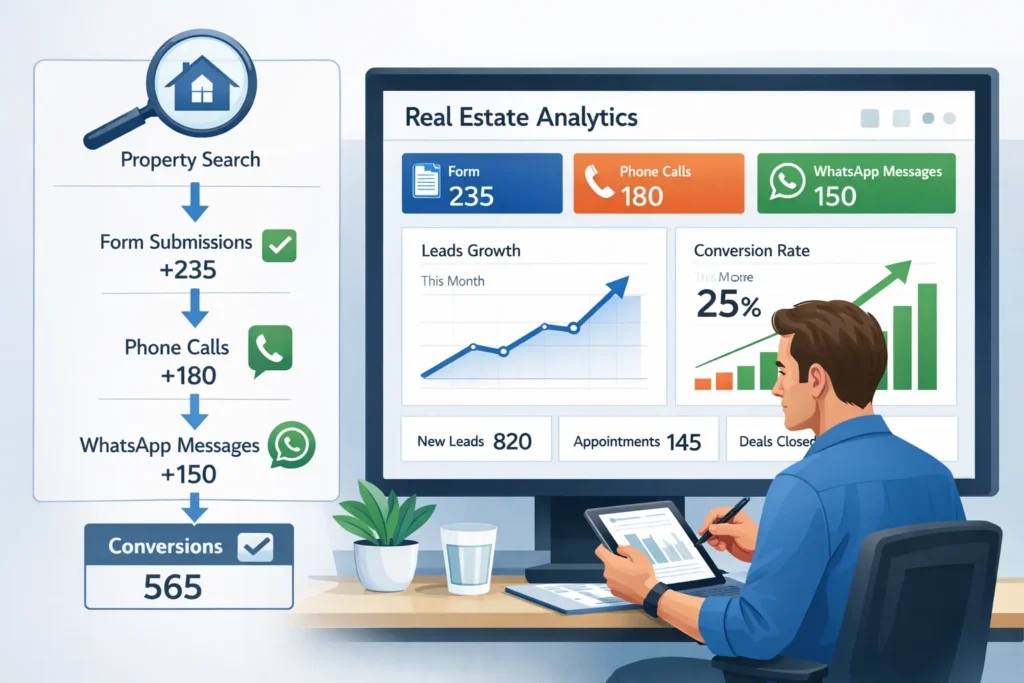
In real estate SEO, traffic numbers are vanity metrics if they don’t generate inquiries or sales. To truly measure success, agencies and developers must track lead-focused metrics and continuously optimize based on performance. At Nexfin Services, we prioritize conversions over clicks because high-intent leads drive revenue, not pageviews.
Tracking the Right Metrics
Instead of obsessing over total visitors, focus on actionable lead signals:
- Form submissions: Contact forms, property inquiry forms, consultation requests
- Calls: Track via call-tracking numbers linked to specific pages or campaigns
- WhatsApp & chat inquiries: Especially critical in GCC and Pakistan, where messaging apps are preferred communication channels
These metrics directly show whether SEO efforts are translating into real business opportunities.
SEO KPIs That Matter
The right Key Performance Indicators (KPIs) focus on quality, intent, and engagement:
- Organic conversion rate: Percentage of visitors taking desired actions
- Engagement & dwell time: Pages with longer sessions indicate valuable, high-intent traffic
- Keyword intent performance: Which search terms are driving actual inquiries versus casual browsing
By analyzing these KPIs, you can separate qualified leads from generic traffic and ensure your SEO strategy is truly lead-generating.
Continuous Optimization
SEO isn’t set-and-forget. High-performing real estate websites require ongoing analysis and optimization:
- Updating winners: Refresh pages that already drive traffic and leads with current pricing, listings, or legal updates
- Fixing underperformers: Identify pages with high bounce rates or low conversions and optimize content, CTAs, or internal links
- Scaling what converts: Expand successful strategies to similar neighborhoods, property types, or buyer segments
This data-driven approach ensures that your SEO consistently delivers qualified leads, not just traffic, creating long-term ROI for real estate businesses.
Common Real Estate SEO Mistakes (And How to Avoid Them)
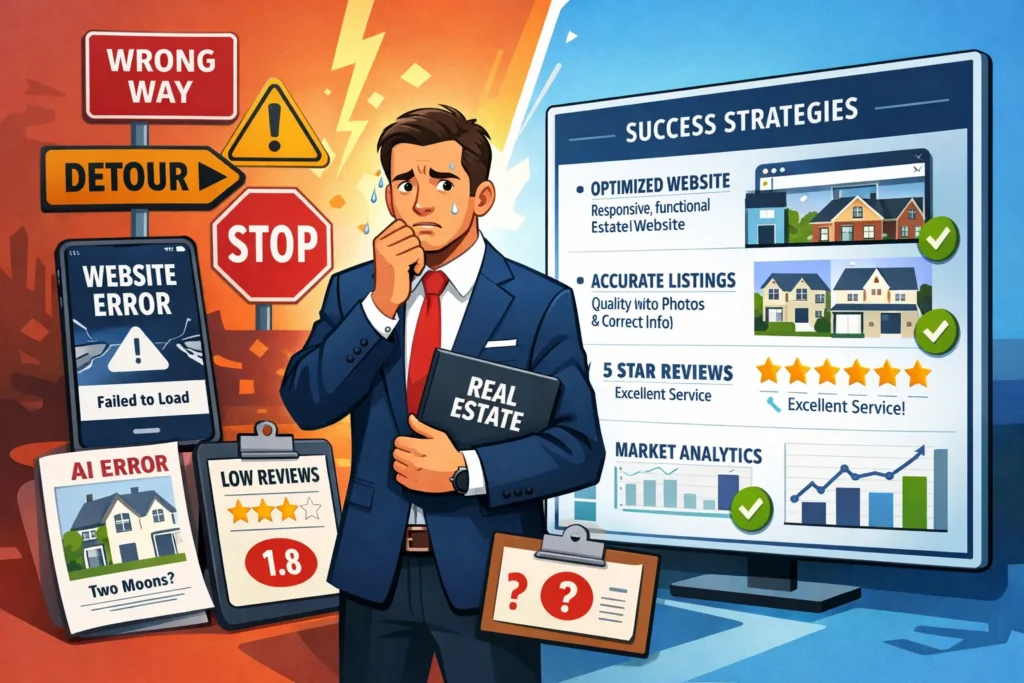
Even experienced real estate businesses can stumble when implementing SEO. Avoiding these common pitfalls ensures your strategy generates qualified leads instead of empty traffic numbers.
1. Chasing Traffic-Only Keywords
- Mistake: Focusing on broad, high-volume keywords like “real estate” or “apartments”
- Impact: Attracts casual visitors who rarely convert
- Solution: Target long-tail, location-specific, and intent-driven keywords such as “3-bedroom apartment for sale in Bahria Town Lahore” or “luxury villas in Dubai Marina.” This ensures you’re capturing ready-to-act buyers and investors.
2. Ignoring Mobile Users
- Mistake: Neglecting mobile optimization, assuming desktop traffic is sufficient
- Impact: Slow-loading pages, poor user experience, and lost leads
- Solution: Optimize for mobile-first design, fast-loading property images, and touch-friendly layouts, especially in GCC and Pakistan, where mobile searches dominate.
3. Overusing AI Without Human Expertise
- Mistake: Relying solely on AI-generated content without local context or human touch
- Impact: Generic, low-engagement content that doesn’t build trust
- Solution: Use AI for research or drafts but ensure human expertise shapes content, adds local insights, market nuances, and credibility signals.
4. Weak Local Presence
- Mistake: Not optimizing for Google Business Profile, local directories, or property portals
- Impact: Missing out on high-intent local leads
- Solution: Build a strong local SEO foundation:
- Accurate NAP (Name, Address, Phone)
- Area-specific landing pages
- Reviews, citations, and backlinks from local platforms like Zameen (Pakistan) or Bayut (UAE)
5. No Conversion Tracking
- Mistake: Measuring success by clicks or impressions instead of actual inquiries
- Impact: Misallocated budgets and wasted SEO efforts
- Solution: Track forms, calls, WhatsApp messages, and chats. Focus on organic conversion rates, dwell time, and keyword intent to measure true ROI.
Avoiding these mistakes ensures that your real estate SEO strategy consistently attracts qualified leads, builds trust, and maximizes ROI, rather than just inflating traffic numbers.
Conclusion — SEO as a Long-Term Lead Generation Asset

Real estate SEO is not a quick-fix strategy. Unlike paid ads, which stop generating results the moment you pause spending, SEO is a long-term, compounding investment. By consistently focusing on buyer intent, authority-building, and trust signals, your website becomes a lead-generating engine that keeps delivering results over time.
The power of SEO lies in the compound effect:
- High-intent keywords attract prospects who are ready to act
- Optimized on-page, technical, and local SEO signals convert them into inquiries
- Authority-building and content marketing establish your brand as a trusted market leader
By owning search in your target markets—whether Pakistan, UAE, Saudi Arabia, Qatar, or Bahrain—real estate developers, brokers, and agencies position themselves ahead of competitors who chase traffic alone.
Ready to turn your website into a predictable source of qualified real estate leads?
Nexfin Services helps developers and agencies convert SEO into measurable growth. From high-intent keyword strategy to local SEO, content marketing, and authority-building, we deliver results that matter.
Book a free consultation today and start attracting leads that are ready to buy, sell, or invest.
FAQs (SEO & Featured Snippet Friendly)
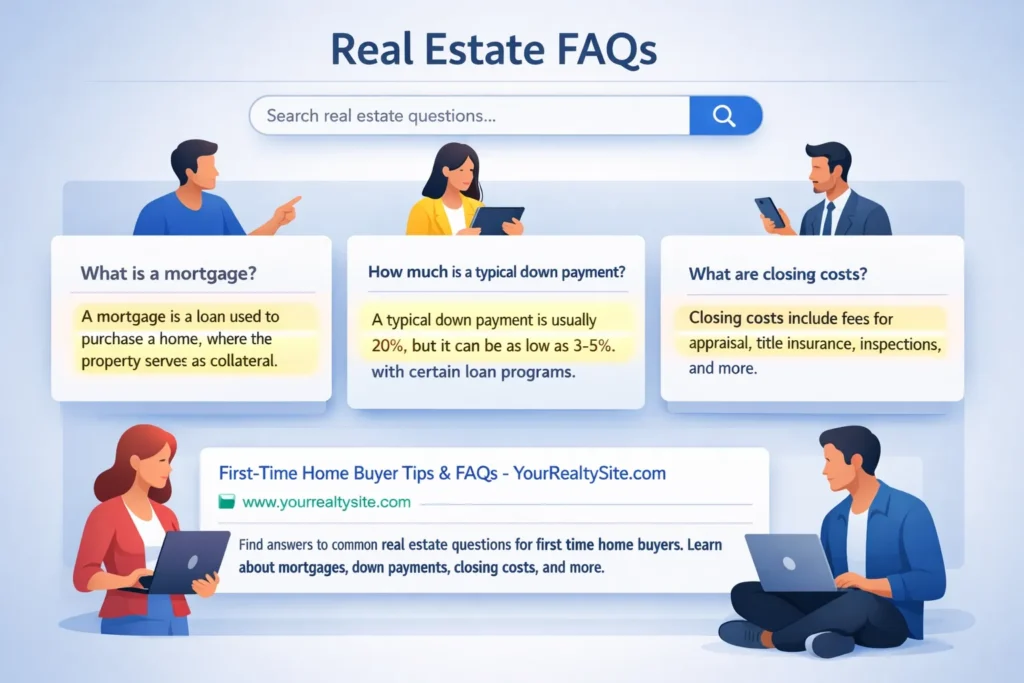
How long does real estate SEO take to generate leads?
Real estate SEO is a long-term strategy, but results can often be seen within 3–6 months for local and niche markets. High-intent keywords, optimized content, and technical SEO improvements typically start generating qualified inquiries, while authority-building efforts compound over 12+ months for maximum impact.
Is SEO better than paid ads for real estate?
SEO and paid ads serve different purposes. Paid ads provide instant visibility but stop generating leads once the budget ends. SEO builds sustainable, high-intent traffic that converts over time. Combining both can maximize ROI, but for long-term, predictable leads, SEO often delivers higher-quality inquiries at a lower cost per lead.
Does bilingual SEO really increase conversions?
Yes. In markets like the UAE, Saudi Arabia, Qatar, Bahrain, and Pakistan, targeting multiple languages (English + Arabic or English + Urdu) ensures your website reaches local residents, expats, and overseas investors. Bilingual content captures diverse audiences and improves trust, which directly increases conversion rates.
What makes real estate SEO different in 2026?
Real estate SEO in 2026 focuses on buyer intent, trust, and technical excellence:
- High-intent, location-specific keywords
- Mobile-first, fast-loading, and visually engaging sites
- E-E-A-T (Experience, Expertise, Authority, Trust) and rich snippets
- Integrated local SEO and property portals
It’s no longer about traffic alone—SEO now filters tire-kickers and delivers leads that convert.
How can Nexfin Services help my real estate business?
Nexfin Services specializes in real estate digital marketing across Pakistan and the GCC. We help:
- Identify high-intent buyer and investor keywords
- Optimize websites for mobile, technical SEO, and user experience
- Build authority through content marketing, backlinks, and digital PR
- Drive qualified leads through local SEO, listings, and property portals
Our approach ensures your SEO strategy generates measurable, predictable growth, turning your website into a lead-generation engine.